CPA vs. Bookkeeper: Key Differences and Which One Your Business Needs
Last Updated: 2025
For many small business owners, the terms "CPA" and "bookkeeper" blur together into "the person who handles my money stuff." But these are fundamentally different professionals with different qualifications, different scopes of work, and very different levels of strategic value — and hiring the wrong one for the wrong job can leave you either overpaying for services you don't need or, more commonly, missing the professional expertise you do.
This guide draws a clear line between what a CPA does and what a bookkeeper does, explains when you need each, and shows you how many successful small businesses use both — strategically — to get the best of both worlds at a cost structure that makes sense.
Table of Contents
- The Core Distinction: What Each Professional Does
- What a Bookkeeper Does
- What a CPA Does
- Qualifications Comparison: CPA vs. Bookkeeper
- Services Comparison at a Glance
- Cost Comparison: CPA vs. Bookkeeper
- When to Hire a Bookkeeper
- When to Hire a CPA
- The Best of Both Worlds: The CPA-Supervised Bookkeeper Model
- Frequently Asked Questions
- Conclusion
The Core Distinction: What Each Professional Does
Here's the clearest way to understand the difference:
A bookkeeper records what happened. A CPA tells you what it means, what to do about it, and how to make it better.
Bookkeeping is the foundation — the systematic recording of financial transactions. It answers questions like: What was deposited into the bank account? What expenses were paid? What do customers owe the business? What does the business owe vendors?
Accounting and tax work builds on top of that foundation. It answers questions like: How profitable is the business? Are we meeting our tax obligations? How can we reduce the tax bill legally? Are our margins improving or deteriorating? What does the business's financial position mean for our ability to grow?
Both functions are necessary. But they're distinct — and that distinction matters when you're deciding who to hire and what to pay.
What a Bookkeeper Does
Bookkeeping encompasses the day-to-day recording and organization of a business's financial transactions. A bookkeeper's primary responsibilities include:
Transaction Recording
Every financial transaction a business engages in — every sale, every purchase, every expense, every payment — needs to be recorded in the accounting system. A bookkeeper ensures that transactions are captured completely, categorized correctly, and recorded in the proper period.
In a modern small business, this often means connecting the accounting software (QuickBooks Online, Xero, Wave, FreshBooks) to bank accounts, credit card accounts, and payment processors so that transactions flow in automatically. The bookkeeper then reviews, categorizes, and reconciles these transactions.
Bank and Credit Card Reconciliation
Every month, a bookkeeper reconciles the business's bank accounts and credit card statements against the accounting records. This process catches discrepancies — duplicate entries, missed transactions, errors — and ensures that the accounting records match the actual account balances. Regular reconciliation is a fundamental internal control.
Accounts Receivable Management
Tracking money owed to the business — open invoices, payment due dates, and overdue balances — is a core bookkeeping function. A bookkeeper generates invoices, records payments, and maintains an aging report that shows which customers owe money and for how long.
Accounts Payable Management
Similarly, tracking money the business owes vendors — bills due, payment terms, and overdue obligations — falls to the bookkeeper. This includes entering vendor bills, scheduling payments, and maintaining accurate payable records.
Payroll Processing
Many bookkeepers handle payroll processing — calculating employee wages, withholding taxes, and generating direct deposits or checks. They also submit payroll tax deposits and maintain payroll records. However, preparing the related tax returns (Form 941, W-2s) typically requires CPA oversight.
Monthly Financial Reports
A skilled bookkeeper produces basic financial reports from the accounting software: income statement (profit and loss), balance sheet, and sometimes cash flow statements. These reports are the primary output that owners and their CPA use to assess the business's financial position.
What Bookkeepers Generally DON'T Do
Bookkeepers generally do not:
- Prepare or file tax returns
- Provide tax planning advice
- Perform financial audits
- Represent clients before the IRS
- Advise on business structure or entity elections
- Provide strategic financial advisory services
- Prepare reviewed or audited financial statements
For these higher-level functions, you need a CPA.
What a CPA Does
A Certified Public Accountant (CPA) brings a much broader scope of professional services to the table:
Tax Return Preparation and Filing
This is the most visible CPA service. A CPA prepares and files your business's annual tax return (Schedule C, Form 1065, 1120-S, or 1120), ensures all legitimate deductions are claimed, and signs the return as the professional preparer of record.
Tax Planning
Tax planning is the proactive process of minimizing your tax liability through legal strategies — and it's where CPAs deliver enormous value. This includes advising on entity structure, retirement plan contributions, equipment purchase timing, income recognition timing, and dozens of other strategies that depend on your specific financial situation.
Financial Statement Preparation
For businesses that need formal financial statements for financing, investor relations, or regulatory purposes, a CPA can prepare compiled or reviewed financial statements that carry professional attestation. Audited financial statements can only be prepared by CPAs.
Business Advisory Services
Experienced CPAs often serve as informal advisors on major business decisions — evaluating the financial implications of expansion plans, pricing strategies, hiring decisions, and capital investments. For many small businesses, the CPA is the closest thing to a part-time CFO.
IRS Representation
If your business receives an IRS notice, is selected for audit, or has back taxes, a CPA can represent you before the IRS with unlimited representation rights — a legal authority that bookkeepers do not have.
Payroll Tax Return Preparation
While a bookkeeper may process payroll, a CPA (or CPA-supervised accountant) typically prepares and files the associated tax returns: Form 941 (quarterly payroll tax), Form 940 (federal unemployment), and W-2s at year-end.
Qualifications Comparison: CPA vs. Bookkeeper
| Qualification | CPA | Bookkeeper |
|---|---|---|
| Educational requirement | 150 credit hours of college education | None required |
| Licensing | State-licensed by board of accountancy | No license required |
| Examination | Uniform CPA Exam (4-part, ~50% pass rate) | Optional certifications |
| Experience requirement | 1-2 years supervised experience | No minimum |
| Ongoing education | 40 CPE hours/year required | No requirement |
| Title legally protected | Yes (criminal offense to misuse) | No |
| Credential verifiable | Yes (state board database) | No central registry |
| IRS representation rights | Unlimited | None |
| Can sign audit reports | Yes | No |
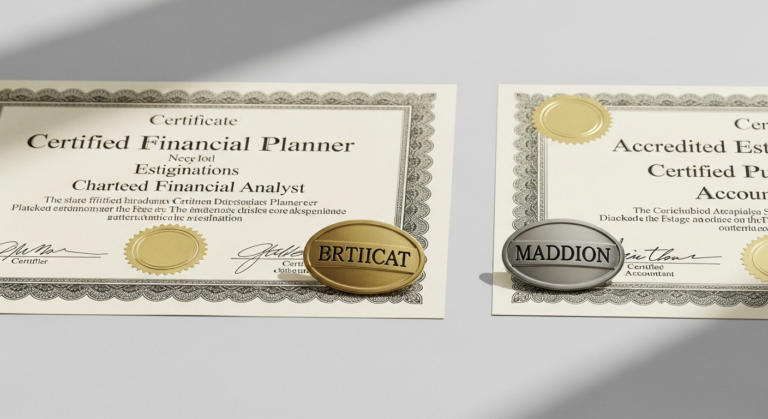
The qualifications gap is significant. Hiring a bookkeeper means accepting that their competence is unregulated and must be assessed through references, interviews, and observation. Hiring a CPA means you have a standardized baseline of verified, licensed competence.
Services Comparison at a Glance
| Service | CPA | Bookkeeper |
|---|---|---|
| Daily transaction recording | ✓ (but usually not cost-efficient) | ✓ |
| Bank reconciliation | ✓ | ✓ |
| Accounts receivable/payable | ✓ | ✓ |
| Payroll processing | ✓ | ✓ |
| Monthly financial statements | ✓ | ✓ (basic) |
| Tax return preparation | ✓ | ✗ |
| Tax planning and strategy | ✓ | ✗ |
| IRS representation | ✓ | ✗ |
| Business advisory | ✓ | ✗ |
| Compiled/reviewed financials | ✓ | ✗ |
| Financial audits | ✓ | ✗ |
| Business valuation | ✓ | ✗ |
Cost Comparison: CPA vs. Bookkeeper
The cost difference between a CPA and a bookkeeper is significant — which is why many businesses use each for the services where they provide the best value.
Bookkeeper costs:
- Hourly rate: $20–$60/hour
- Monthly retainer: $300–$1,500/month (depending on volume and scope)
- Annual cost for typical small business: $3,600–$18,000
CPA costs:
- Hourly rate: $150–$400/hour
- Monthly accounting retainer: $500–$3,000/month
- Annual tax preparation only: $1,000–$5,000
- Annual cost for comprehensive services: $10,000–$40,000+
Using a CPA for routine transaction recording and bank reconciliation is usually inefficient — you're paying $150–$400/hour for work a $30–$60/hour bookkeeper can do equally well. The smart move is using each professional for the work where they add the most value.
When to Hire a Bookkeeper
A bookkeeper is the right hire (or the first hire) when:
You need transaction recording and basic reporting but don't yet need complex tax or advisory services. For a new business in its first year with modest revenue and simple transactions, a bookkeeper can establish the accounting foundation at a lower cost than a full CPA engagement.
You need someone who can handle day-to-day transaction volume. As a business grows, the volume of invoices, receipts, bills, and payments requires dedicated time to manage. A bookkeeper's focused time at a lower hourly rate is more efficient than a CPA's.
Your CPA firm recommends one. Many CPA firms specifically recommend that clients use a bookkeeper or work with a bookkeeper affiliated with the firm — so the CPA can focus on higher-value services while the bookkeeper handles routine data management.
When to Hire a CPA
A CPA is the right hire (or the additional hire) when:
You need tax preparation and filing. Bookkeepers cannot prepare or sign tax returns. If you have a business, you need a CPA for your annual (and often quarterly) tax obligations.
You want proactive tax planning. Only a CPA can provide the strategic tax advice that reduces your tax liability year after year. This is where the real financial value of the CPA relationship shows up.
You face an IRS issue. If you receive an IRS notice, are audited, or have back taxes, you need a CPA (or Enrolled Agent) immediately.
You need formal financial statements. If a lender, investor, or regulatory body requires compiled, reviewed, or audited financial statements, only a CPA can provide them.
You need business advisory support. For significant decisions — entity structure, business valuation, acquisition analysis, succession planning — a CPA's expertise is invaluable.
Your business has grown significantly. As revenue climbs and financial complexity increases, the value of CPA-level expertise grows proportionally.
The Best of Both Worlds: The CPA-Supervised Bookkeeper Model
The most efficient approach for most growing small businesses is a team model: a bookkeeper handles day-to-day transaction management (at bookkeeper rates), supervised and reviewed by a CPA who handles tax planning, tax preparation, financial statement review, and strategic advisory (at CPA rates).
This model is offered by many modern CPA firms in one of two ways:
In-house model: The CPA firm has bookkeeping staff who work under CPA supervision. You get one bill and one relationship, but the actual transaction work is done by the lower-cost team members while the CPA focuses on strategy.
Collaborative model: You hire a bookkeeper separately (either through the CPA firm's referral or independently), and the bookkeeper's work feeds into the CPA's tax and advisory services. The CPA periodically reviews the books to ensure accuracy before preparing financial statements or tax returns.
Both models work well. The key is clarity about who is responsible for what — and ensuring that the CPA is genuinely reviewing and supervising the bookkeeping work, not just assuming it's correct.
Frequently Asked Questions
Q: Can a bookkeeper prepare my taxes?
No. Bookkeepers are not licensed to prepare tax returns as paid professionals (without also holding a PTIN and having appropriate training). Tax return preparation requires professional qualifications — a CPA, Enrolled Agent, or at minimum a credentialed tax preparer. Don't ask your bookkeeper to prepare your business taxes.
Q: Do I need both a CPA and a bookkeeper?
Many businesses benefit from having both. The bookkeeper handles routine transaction work efficiently at bookkeeper rates; the CPA handles tax, strategy, and financial oversight at CPA rates. The combination typically provides better service at lower total cost than having a CPA do everything.
Q: What's a QuickBooks ProAdvisor — are they a CPA?
QuickBooks ProAdvisor is a certification offered by Intuit (the maker of QuickBooks) for people who demonstrate proficiency in using QuickBooks software. It is not a CPA license and does not indicate any accounting credential beyond software competency. Many bookkeepers and accountants hold this certification; so do many CPAs.
Q: Can a bookkeeper help if I'm audited?
No. Bookkeepers have no representation rights before the IRS. If you're audited, you need a CPA or Enrolled Agent to represent you.
Q: How often should my CPA review my bookkeeper's work?
For a CPA-supervised bookkeeping arrangement, at minimum quarterly review is appropriate — more often for complex businesses. At year-end, the CPA should conduct a thorough review before preparing financial statements and tax returns.
Q: Is it cheaper to just have a CPA do everything?
It's less efficient, not necessarily cheaper. Using a CPA for routine transaction recording means paying $150–$400/hour for tasks a $30–$60/hour bookkeeper does equally well. The total cost of having a CPA do everything is usually higher than the team model, without providing better outcomes for the bookkeeping component.
Q: What should I look for in a bookkeeper?
Key qualities: attention to detail, proficiency in your accounting software (especially QuickBooks Online or Xero), experience with businesses similar to yours in size and industry, strong communication, and ideally a professional certification (Certified Bookkeeper from AIPB, or QuickBooks ProAdvisor). Always check references.
Conclusion
CPAs and bookkeepers are not interchangeable — they serve different functions at different levels of expertise and cost. Understanding the distinction helps you build the right professional team for your business: using bookkeepers efficiently for routine transaction work and CPAs strategically for tax, compliance, and advisory services where their expertise delivers disproportionate value.
The most successful small business owners don't think of it as "CPA or bookkeeper" — they think of it as building a complete financial team that covers all the bases. A good bookkeeper keeps the books clean. A good CPA keeps the taxes low and the strategy sound. Together, they create the financial foundation that allows a business to grow confidently.
Our CPA firm offers integrated bookkeeping and accounting services — ensuring your books are handled accurately and your tax strategy is optimized. Contact us to learn how we can build the right solution for your business.
Related Articles: