Average CPA Hourly Rate: What CPAs Charge and Why
Last Updated: 2025
When people ask "what does a CPA charge per hour?" they expect a straightforward answer. The honest answer is that CPA hourly rates vary significantly—from around $150 per hour for junior staff accountants at smaller firms to $500 or more per hour for senior partners at specialized practices in major markets. Understanding what drives those rates, when hourly billing applies, and how to evaluate value rather than just rate makes you a more informed buyer of professional services.
This article covers the national range of CPA hourly rates, what factors move the rate up or down, how hourly billing compares to flat fee and retainer arrangements, and how to calculate the true cost of hourly vs. alternative billing structures.
Table of Contents
- National Average CPA Hourly Rates
- Rate Variation by Role Within a Firm
- Factors That Drive Hourly Rate Up or Down
- Geographic Market Impact on Rates
- Specialization and Its Effect on Rates
- Hourly Rates vs. Flat Fee: When Each Makes Sense
- Billing Increments: The Hidden Cost Factor
- Calculating the True Cost of Hourly Billing
- What Drives Cost Beyond the Rate
- Alternative Fee Structures
- Monthly Retainers: A Different Model
- How to Negotiate (and When)
- What Good Value Looks Like vs. Low Rate
- Frequently Asked Questions
- Conclusion
National Average CPA Hourly Rates
Based on industry surveys and market data, here are the typical hourly rate ranges for CPA services in the United States:
Tax return preparation work:
- Staff accountant (2–5 years experience): $80–$150/hour
- Senior accountant (5–10 years): $120–$200/hour
- CPA manager (10+ years): $175–$275/hour
- CPA partner/principal: $250–$400/hour
Advisory, planning, and consulting work:
- Senior CPA: $200–$300/hour
- Experienced partner: $300–$500/hour
- Highly specialized CPA (estate planning, international, M&A): $400–$600+/hour
Bookkeeping and accounting support:
- Bookkeeper: $40–$80/hour
- Senior bookkeeper / accounting technician: $60–$100/hour
- Staff accountant handling client accounting: $75–$125/hour
These are broad national ranges. Actual rates depend heavily on geography, firm size, the specific nature of the work, and the experience level of the person doing the work. A partner at a Big Four firm in New York City may charge $600–$800/hour; a CPA principal at a solo practice in rural Indiana may charge $150/hour for partner-level work.
Rate Variation by Role Within a Firm
Understanding how CPA firms structure their rates internally helps you understand what you're paying for.
Bookkeepers and Accounting Technicians
Many CPA firms employ bookkeepers or accounting technicians to handle data entry, bank reconciliation, accounts payable and receivable processing, and basic transaction recording. These professionals are not CPAs—their training is narrower—but they handle work that doesn't require a CPA's judgment. Billing rates: $40–$80/hour.
Staff Accountants
Entry-level to mid-level accounting professionals with bachelor's degrees in accounting, often working toward their CPA license. They handle tax return preparation under CPA supervision, basic financial statement work, and supporting tasks. Billing rates: $80–$150/hour.
Senior Accountants and CPAs
Professionals with several years of experience who have passed the CPA exam. They handle more complex return preparation, client-facing work, and some advisory functions. Many planning and analysis projects are done at this level. Billing rates: $120–$225/hour.
Managers and Senior Managers
Experienced CPAs who supervise staff, handle complex client situations, and often have developed a specialty area. In many firms, client relationships are managed at the manager level. Billing rates: $175–$300/hour.
Partners and Principals
Owners of the firm with the highest expertise and professional responsibility. Partners sign returns, take final responsibility for work quality, and handle the most complex and sensitive client matters. In smaller firms, partners do more direct work; in larger firms, partners are often more focused on client relationships and review. Billing rates: $250–$500+/hour.
The Blended Rate Concept
Many CPA firms use a blended rate approach when presenting fees—quoting an overall project rate that reflects the mix of staff who will work on the engagement, rather than breaking down individual hourly rates. A return that requires four hours of staff time at $100/hour and two hours of partner time at $350/hour might be quoted at a blended $183/hour, or more likely as a flat fee of $1,100.
Factors That Drive Hourly Rate Up or Down
Several factors systematically influence where a specific CPA's rate falls within these ranges:
Experience and Credentials
A CPA with 20 years of experience in small business tax, two relevant specializations (say, real estate and estate planning), and a track record of successful client outcomes commands a higher rate than a recently licensed CPA. This reflects the market value of accumulated expertise—in professional services, experience typically translates to both better outcomes and faster execution, so a senior professional's higher hourly rate often reflects better overall value.
Additional Certifications
CPAs who hold additional credentials charge premiums for that specialized expertise:
- Personal Financial Specialist (PFS): financial planning expertise
- Accredited in Business Valuation (ABV): business valuation
- Certified Fraud Examiner (CFE): forensic accounting
- CGMA or other management accounting credentials
These credentials represent meaningful additional training and competency in specialized areas. When the work requires that specialty, the premium is often well worth it.
Firm Size and Positioning
Large regional firms and Big Four firms charge premium rates reflecting their infrastructure, brand, quality control systems, and the depth of resources available for complex matters. A large firm can assemble a team quickly for a complex transaction; a small firm may not have that capacity. Clients who need that kind of institutional capacity pay for it.
Small and mid-sized CPA firms typically charge less for equivalent work—the overhead is lower, the billing model is different, and market positioning is often based on accessibility and relationship rather than brand. For most small-to-mid-sized business owners, a regional CPA firm or sole practitioner with relevant experience provides excellent value.
Nature of the Work
Different work types attract different rates from the same CPA. Tax return preparation (relatively systematic work) is typically billed at a lower rate than tax planning or advisory (requiring creative analysis and judgment). Audit work, which has specific professional standards and significant liability implications, is priced differently from tax work. IRS representation in complex matters may be billed at a premium reflecting the adversarial nature of the work.
Geographic Market Impact on Rates
Geography is one of the strongest determinants of CPA rates. A CPA in San Francisco can charge $350/hour for work that a comparably qualified CPA in a mid-sized Midwestern city charges $175/hour for—and both rates are appropriate for their respective markets.
Major metros with highest rates: New York City, San Francisco/Bay Area, Los Angeles, Boston, Washington D.C., Chicago, Seattle. Partner rates at $400–$600/hour are not unusual in these markets.
Secondary markets: Atlanta, Denver, Phoenix, Charlotte, Nashville, Minneapolis. Rates run 20–40% lower than major metros. Strong competition for clients with several qualified firms typically keeps rates competitive.
Small markets and rural areas: Rates are lower, but CPA availability may also be lower. Rural CPA shortages have become a significant issue—some rural clients pay more than expected simply because there are fewer options.
Virtual CPA firms: The growth of remote work has enabled virtual CPA practices that serve clients across the country regardless of location. A virtual firm based in a lower-cost area may offer major-metro-quality expertise at regional prices. Geography-based pricing arbitrage is real, though evaluating quality requires more diligence when you can't meet in person.
Specialization and Its Effect on Rates
Specialization commands premium rates because specialized knowledge is scarce and the stakes are higher.
Industry Specialization
A CPA who specializes in restaurant accounting, medical practice management, real estate investing, or technology startups brings industry-specific knowledge that generalists lack. They know the common deductions, the typical ratios, the relevant tax elections, and the regulatory environment for that industry. This specialization reduces errors, improves advice quality, and often saves clients money—justifying a premium.
Tax Specialization Areas
Estate and gift tax: Estate planning and trust work involves the highest individual asset values and is highly technical. CPAs specializing here often have additional training (sometimes law degrees) and charge at the upper end of the market.
International tax: U.S. tax implications of foreign operations, FBAR compliance, Form 5471 (controlled foreign corporations), Form 5472 (foreign-owned U.S. corporations), transfer pricing—this is specialized territory. Rates reflect the complexity and the consequences of errors.
Tax controversy: CPAs who specialize in IRS audits, appeals, and collection matters have a specific skill set. Hourly rates for audit representation or offer in compromise work often run $200–$400/hour even at smaller firms.
Business transaction tax: M&A work, business sales, Section 338 elections, stock vs. asset deal analysis—high stakes, high expertise, premium rates.
Hourly Rates vs. Flat Fee: When Each Makes Sense
Whether hourly or flat fee billing is better for you depends on the nature of the engagement and your risk tolerance.
When Hourly Billing Benefits Clients
Unpredictable scope work. Advisory questions, IRS correspondence, research projects—when neither party knows how much time will be required, hourly billing is fair. You pay for what you actually need.
Short engagements. A one-hour consultation about whether to convert to an S-corp is best billed hourly. A flat fee for such a service would require the CPA to either overprice the simple case or undercharge for the complex one.
When you're organized and efficient. If your records are clean and you provide everything needed efficiently, hourly billing rewards your preparation with a lower bill.
When Flat Fee Billing Benefits Clients
Predictable, recurring work. Annual tax return preparation is predictable in scope (with good communication upfront). A flat fee gives you certainty about costs.
Disorganized situations. If you know your records are imperfect, a flat fee provides a ceiling on your exposure—provided the scope was defined before the fee was quoted.
Budget planning. Businesses that need to forecast their accounting costs benefit from flat fee arrangements. A monthly retainer or annual flat fee for tax preparation integrates cleanly into budget planning.
When complexity might surprise. A flat fee shifts complexity risk to the CPA firm. If the return is harder than expected, the firm absorbs the additional time. (Note: many flat fee engagements include provisions for scope changes, so read the engagement letter.)
Billing Increments: The Hidden Cost Factor
The billing increment is how the CPA measures time. Common increments:
One-tenth of an hour (6 minutes): The standard at large law firms and many professional services firms. Every six minutes of time is rounded up to the next increment. A 7-minute call is billed as two-tenths of an hour (12 minutes at full rate).
Quarter-hour (15 minutes): More common at smaller CPA firms. Every task is rounded up to the nearest 15 minutes. A 2-minute email response becomes 0.25 hours.
Half-hour minimum: Some firms have a half-hour minimum for any billable activity—calls, emails, reviews.
The billing increment matters significantly for a high-volume advisory relationship where you have frequent short questions. Under 6-minute billing, a 3-minute call is billed at 6 minutes. Under 15-minute billing, it's billed at 15 minutes. Over the course of a year with many such interactions, this difference compounds.
Ask about billing increments before engaging, particularly if you anticipate a high-touch relationship with frequent questions.
Calculating the True Cost of Hourly Billing
To evaluate whether hourly billing or flat fee is better for your situation, calculate the expected cost under each model:
Example:
-
Return preparation estimated at 8 hours
-
Partner rate: $300/hour
-
Estimated total: $2,400
-
Flat fee quote from same firm: $2,000
Analysis: In this example, the flat fee saves $400 if the estimate is accurate. But if your return turns out to be simpler than expected—say, 6 hours of actual time—the hourly cost would be $1,800, less than the flat fee. If complications arise and it takes 11 hours, the hourly cost is $3,300, significantly more.
Your choice between these options depends on your confidence in the estimate and your risk tolerance. If you have an unusually complex year (major transaction, lots of K-1s from new investments), negotiating a flat fee with a defined scope protects you from open-ended hourly billing risk.
What Drives Cost Beyond the Rate
The hourly rate is just one component of total cost. Several factors drive cost regardless of the stated rate:
Scope of work. More forms, more states, more entities, more transactions—all add time regardless of rate.
Record organization. Disorganized records require the CPA to spend time sorting, reconciling, and making sense of the financial picture before any actual tax work begins. At $150–$300/hour, sorting through unorganized bank statements is expensive.
Prior year issues. If the prior CPA made errors or left issues unresolved, the new firm spends time researching and correcting before addressing the current year.
Communication frequency. Frequent back-and-forth—questions, clarifications, missing documents—adds time. A complete, organized document delivery reduces this significantly.
Response timing. Delivering records in April adds the hidden cost of rush time—either your return gets rushed (worse quality risk) or your CPA works overtime (potentially premium billing).
Alternative Fee Structures
Beyond hourly and flat fee, several alternative structures are used in CPA relationships:
Monthly Retainer
A fixed monthly fee for a defined package of services. Common for clients who need ongoing accounting support (bookkeeping, payroll processing, financial statements) plus tax preparation. Retainers provide predictability for both parties—the client knows their monthly cost, the CPA knows their revenue.
Typical retainer ranges are covered in detail in our companion article on CPA retainer fees, but briefly: basic advisory retainers run $500–$1,500/month; full-service bookkeeping plus tax oversight runs $1,500–$5,000/month; CFO-level strategic services run $3,000–$12,000+/month.
Annual Flat Fee (Not Monthly)
Some clients prefer a single annual fee covering tax preparation and a defined set of advisory services for the year. This may be preferable to a monthly retainer if the relationship is primarily seasonal (tax-focused rather than year-round bookkeeping).
Value-Based or Outcome-Based Pricing
As described above, fees tied to the value delivered rather than time spent. Most appropriate for discrete high-value projects (business sale planning, restructuring, estate plan implementation) where the outcome is measurable.
How to Negotiate (and When)
Direct fee negotiation with a CPA is possible but limited in effectiveness. Some approaches that do work:
Provide better records. The most effective negotiation is reducing the CPA's required work through organization. Clean records and accounting software reduce time and cost more reliably than asking for a lower rate.
Commit to a longer relationship. Some firms offer discounts or rate stability for clients who commit to a multi-year relationship. Predictable, recurring revenue has value to a CPA firm.
Bundle services. If you need both business and personal returns, ask whether there's a bundling discount. Many firms offer modest discounts for clients who bring all their tax work to one place.
Off-peak preparation. Some firms offer modest discounts for returns prepared outside the peak April filing season. If you can file on extension and aren't in a hurry, ask about off-season pricing.
What doesn't work: Asking a busy, in-demand CPA to cut their rate because another firm quoted less—particularly if the comparison isn't apples-to-apples. Quality CPAs with strong practices rarely need to compete aggressively on price.
What Good Value Looks Like vs. Low Rate
The most important concept in evaluating CPA fees is that the right metric is not the lowest rate—it's the highest net value.
Net value = Tax savings + error prevention + planning benefits + time saved – fees paid
A CPA charging $350/hour who identifies a $15,000 deduction you didn't know about has provided $15,000 in value in one conversation. A CPA charging $175/hour who misses that deduction has actually cost you more.
Markers of good value in a CPA relationship:
- Proactive communication. The CPA tells you about planning opportunities before you ask.
- Specific advice. Recommendations are specific to your situation, not generic.
- Responsive service. Questions get answered promptly, not weeks later.
- Audit confidence. You know the return is defensible because it was prepared carefully.
- Year-round relationship. The CPA knows your business well enough to give relevant advice throughout the year.
Markers of low rate but poor value:
- Missed deductions and elections
- Errors requiring amended returns
- Generic advice not tailored to your situation
- No availability between tax seasons
- No planning conversation, just data entry
Tracking Time: How CPA Firms Record and Bill Hours
Understanding how CPA firms track and record time helps you understand what you're paying for under hourly billing.
Time Tracking Systems
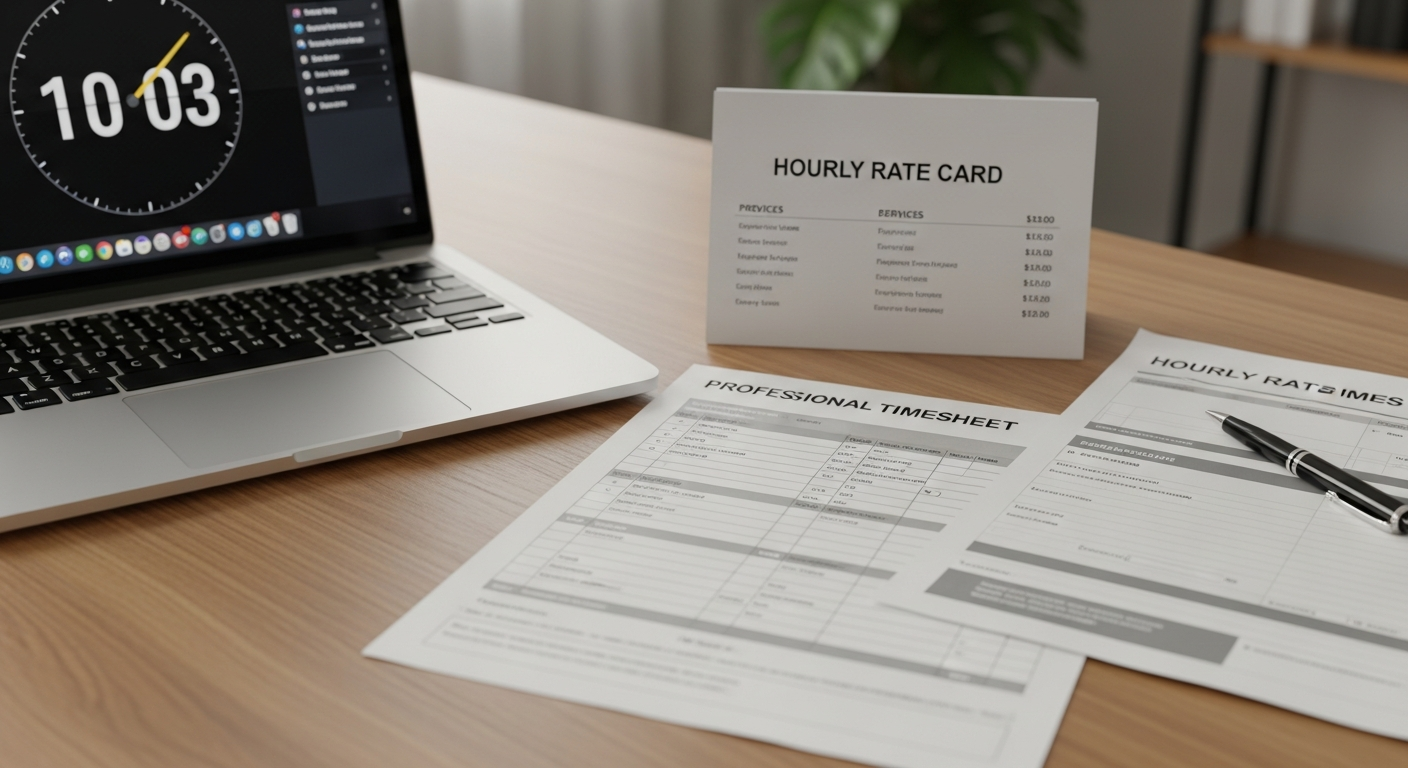
Almost all CPA firms use professional time tracking software—platforms like Practice CS, Bill4Time, TSheets, or similar applications. These systems:
- Record time entries with date, client, matter (which return or project), description, and hours
- Assign billing rates based on the professional doing the work
- Generate itemized invoices that can be provided to clients
- Track write-offs (time worked but not billed, typically when the CPA reduces a bill due to an error or as a courtesy)
The Minimum Time Entry Problem
Most time tracking systems have a minimum entry increment—often one-tenth of an hour (six minutes) or one-quarter hour (fifteen minutes). Every activity—reading a client email, making a phone call, reviewing a document—generates a minimum time entry.
For clients in advisory relationships with frequent communication, these minimums compound. Five emails answered in a day, each taking two minutes but billed at the six-minute minimum, generates thirty minutes of billed time for ten actual minutes of work. At $275/hour, that's $137.50 for $46 of actual effort.
This isn't dishonest—it reflects the genuine cost of the interruption to the professional's workflow, and it's standard industry practice—but it argues for consolidating questions and communications rather than piecemeal emails throughout the day.
Write-Offs and Write-Downs
Ethical CPA firms write off time that shouldn't be billed:
- Time spent on their own learning curve for unusual situations
- Time wasted due to firm errors or miscommunication
- Time that would result in a bill disproportionate to the value delivered
Write-offs are a normal part of professional services billing. A firm that writes off zero time is either exceptionally efficient or not applying professional judgment to their billing. A firm that regularly writes off 15–20% of time is not necessarily more generous—they may simply be accepting work they can't price efficiently.
Requesting Time Detail
Under hourly billing, you are entitled to request an itemized time record. A professional firm can provide:
- Date of each time entry
- Professional who recorded the time
- Time in hours (to the billing increment)
- Description of work performed
- Billing rate applied
If you receive a summary invoice under hourly billing ("Tax preparation services: 12 hours @ $250/hour = $3,000"), you can ask for the detail behind it. Reviewing the detail helps you understand what drove the cost and identify any entries that seem unclear or unexpected.
The Hidden Cost of Cheap: Errors and Their Aftermath
One of the strongest arguments for paying appropriate hourly rates for CPA services is the downstream cost of errors by underqualified preparers.
Common Errors by Underqualified Preparers
Missed elections: Depreciation elections, accounting method elections, S-corporation elections—these are timing decisions with lasting consequences. A preparer who doesn't know these elections exist can't make them.
Incorrect basis calculations: Stock basis, partnership basis, S-corporation basis—these affect how much loss you can deduct and whether gain on disposition is taxable. Errors in basis tracking compound over years.
Passive activity misclassification: Rental income and loss has complex rules about when losses can be deducted against ordinary income. Incorrect classification produces either missed deductions or overclaimed deductions that trigger audit exposure.
Self-employment tax errors: Self-employed individuals pay 15.3% SE tax on net earnings from self-employment. Incorrect calculation of self-employment income (including disregarding the deduction for half of SE tax in calculating income) produces either overpayment or underpayment.
State nexus failures: Not filing in states where a business has a filing obligation—due to physical presence, payroll, or economic nexus for sales tax—creates exposure to back taxes, penalties, and interest when discovered.
The Cost of Correcting Errors
Amending a federal return (Form 1040-X) requires:
- Reviewing the original return and identifying all errors
- Preparing the amendment and all affected schedules
- Potentially amending state returns as well
- Filing and tracking the amendment
A CPA charges $500–$2,000+ to prepare an amended return, depending on complexity. If the original error overstated your tax, the amendment produces a refund—but you've paid for the original preparation, the amendment, and waited potentially 16–20 weeks for the IRS to process the amended return and issue the refund.
If the original error understated your tax, the amendment generates additional tax due plus interest (compounding daily at the federal short-term rate plus 3%) for the period from the original filing date. An underpayment discovered two years later can add 8–10% in interest to the original tax deficit.
Choosing a qualified, appropriately compensated CPA is not just about doing better this year—it's about avoiding the compound cost of errors discovered in future years.
Comparing CPA Costs to Other Professional Services
Context helps evaluate whether CPA hourly rates are reasonable.
Attorneys: General practice attorneys typically bill $200–$400/hour; tax attorneys and transactional specialists, $350–$700+/hour. CPA rates for equivalent complexity work are generally at or below comparable attorney rates.
Financial advisors: Fee-only financial advisors typically charge $200–$400/hour for advice, or manage assets for 0.5–1.5% annually. On a $500,000 portfolio at 1% AUM, you're paying $5,000/year. A comprehensive CPA relationship including tax preparation and planning often costs less.
Management consultants: McKinsey, Bain, and BCG charge $300–$600+/hour for strategy consulting at the associate level; partners charge $800–$1,500+/hour. CPA rates for financial and tax strategy are dramatically lower.
IT consultants: Enterprise technology consultants bill $150–$350/hour. Specialized architects and security experts bill $250–$500+/hour.
In the professional services market, CPA rates occupy the middle range—more than clerical or bookkeeping services, less than specialized legal or management consulting. For the expertise delivered—particularly in tax planning where the advice directly reduces out-of-pocket costs—CPA services represent strong value relative to their cost.
Frequently Asked Questions
Q: Do CPA firms charge for initial consultations?
It varies. Many CPA firms offer a free initial consultation of 20–30 minutes to discuss your situation and determine whether there's a fit. Others charge from the first minute. Ask when you call. A paid initial consultation is not necessarily a red flag—some firms charge a modest consultation fee that applies toward the engagement if you move forward.
Q: Is it cheaper to use a CPA firm or a solo CPA practitioner?
Often, a solo practitioner charges less per hour and may offer more partner attention than a larger firm. However, a larger firm has more staff resources for complex situations and more infrastructure for quality control. For most small-to-mid-sized business tax preparation, a well-qualified solo CPA or small firm provides excellent value. For complex transactions, multi-state operations, or situations requiring specialized expertise, a larger firm with relevant capabilities may be worth the premium.
Q: Should I care who at the firm actually prepares my return?
Yes. Ask who will prepare your return—a staff accountant, a senior CPA, or a partner—and who will review it. At many firms, junior staff prepare returns and a senior CPA or partner reviews. This is efficient and appropriate. The problem arises when review is cursory or the preparer lacks adequate supervision. Ask about the review process and whether you'll have access to the reviewing CPA with questions.
Q: How often do CPA firms raise their hourly rates?
Annual rate increases of 3–8% are common at healthy CPA practices, reflecting inflation, increased staff compensation, and rising overhead. A firm that hasn't raised rates in five years may be under financial pressure, which is a different kind of concern. Expect rates to increase modestly year-over-year and factor this into long-term budget planning.
Q: What's the difference in hourly rate for audit vs. tax work?
Audit work is often priced separately from tax work. Audits require following Generally Accepted Auditing Standards (GAAS), carrying significant professional liability, and engaging all firm staff at rigorous quality standards. Hourly rates for audit partners are often comparable to tax partners, but the blended rate across the audit team may differ. More practically, audits for small businesses are typically priced as project engagements rather than on a pure hourly basis.
Conclusion
CPA hourly rates range from $80/hour for entry-level staff accountants to $500+/hour for specialized partners in major markets. The rate is determined by experience, role, geography, specialization, and firm size—not by a uniform standard.
But the hourly rate is just one piece of the cost equation. Billing increments, scope of work, record organization, and the efficiency of the working relationship all drive total cost. And total cost is still not the full picture—the right question is net value, which accounts for tax savings, error prevention, planning benefits, and peace of mind alongside the fee.
The best CPA relationship is one where the fees are transparent, the scope is clearly defined, and you receive proactive, specific advice that pays for itself many times over.
Our firm is transparent about our billing structure and takes time upfront to explain exactly what your engagement will include. Contact us to discuss your situation and get a straightforward conversation about what professional CPA services would cost for your specific needs.
Related Articles: